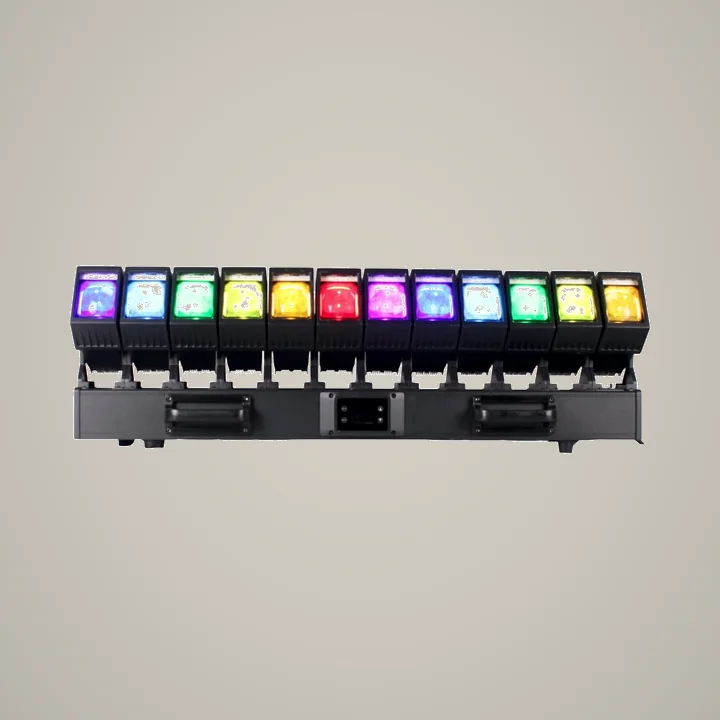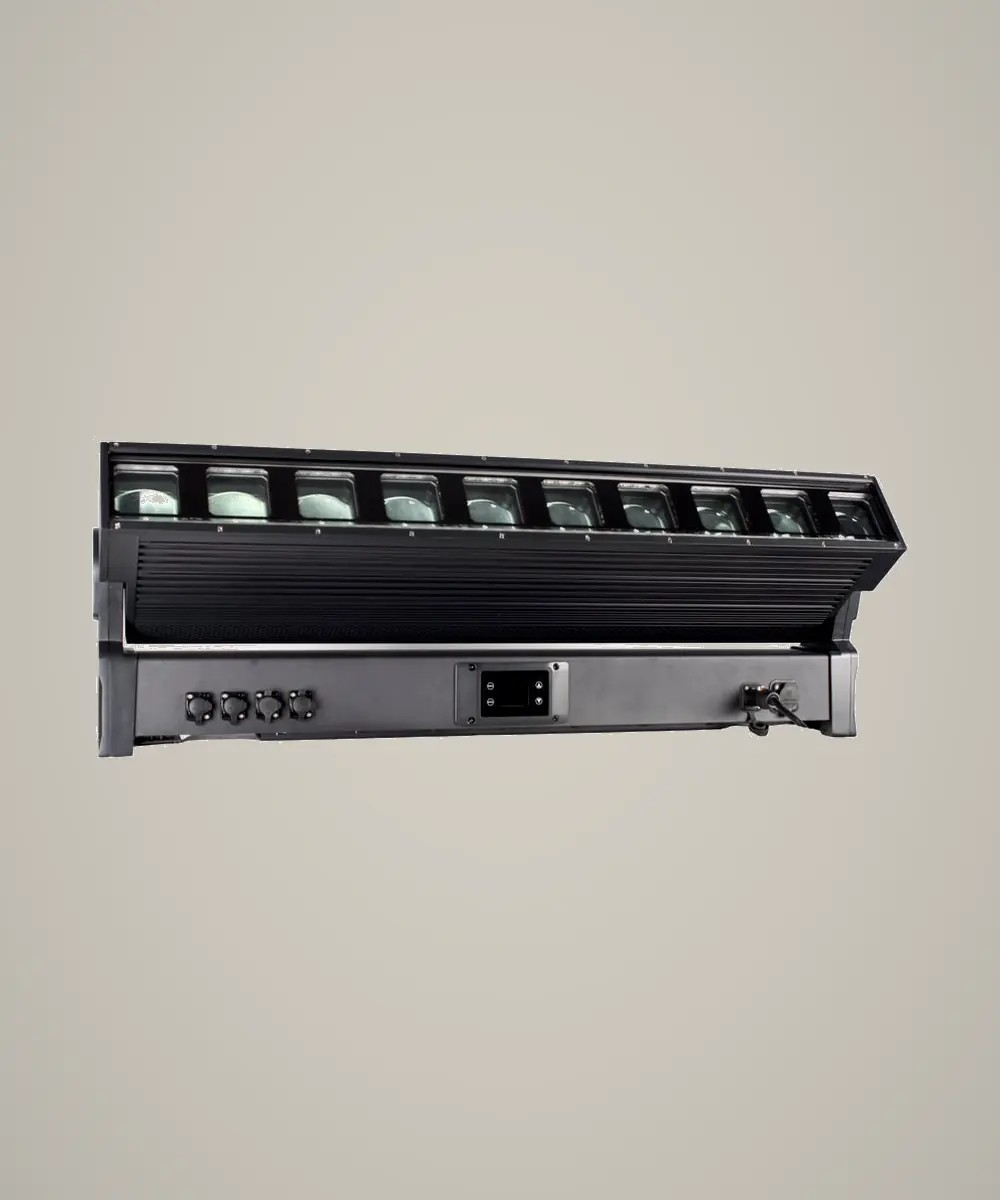
DL1060-IP
DL1060 IP is an LED zoom moving head bar light with 10pcs 60W RGBW main LEDs, side strobe LEDs including 96pcs 3W CW LEDs, 96pcs 3W WW LEDs and 96pcs 0.5W RGB LEDs. It features 2°-45° zoom, 25,000LM total luminous flux, 202° tilt movement, main LED full control or pixel control, segmented strobe control, electronic focus, 0-100% linear dimming, DMX control, RDM function and multiple DMX channel modes.
| Power input | AC100-240V, 50/60Hz |
|---|---|
| Light source | Main Light: 10pcs 60W RGBW LEDs; Side Strobe: 96pcs 3W CW LEDs + 96pcs 3W WW LEDs + 96pcs 0.5W RGB LEDs |
| LED configuration | 10pcs 60W RGBW LEDs; 96pcs 3W CW LEDs; 96pcs 3W WW LEDs; 96pcs 0.5W RGB LEDs |
| Color system | RGBW main LEDs; CW white LEDs; WW white LEDs; RGB strobe LEDs; Main LED full control or pixel control; Segmented side strobe control; Multiple preset effects |
| CCT / color temperature | CW / WW, exact CCT to be confirmed |
| Luminous flux | 25000LM |
| Beam angle | 2°-45° |
| Zoom range | 2°-45°, freely adjustable |
| Control | DMX control; RDM function; Built-in programs; Remote DMX address change and fixture reset from controller |
| DMX channels | 17/27/99/108/168/170CH |
| Dimming | 0-100% linear dimming |
| Strobe | Controllable strobe; Multiple built-in chase effects and presets |
| Tilt | 202°, 16bit precision scanning |
| Display | High-brightness color LCD display; 4 touch buttons |
| IP rating | IP20 |
| Working temperature | High temperature automatic protection; exact working temperature range to be confirmed |
Specifications are based on the current DL1060 IP product record and may change without prior notice. CRI, Packing size, Gross weight, Certification, Warranty, MOQ, Lead time require final sales confirmation.
Product questions
What type of fixture is DL1060-IP?
DL1060-IP is a LED Zoom Moving Head Bar Light. DL1060 IP is an LED zoom moving head bar light with 10pcs 60W RGBW main LEDs, side strobe LEDs including 96pcs 3W CW LEDs, 96pcs 3W WW LEDs and 96pcs 0.5W RGB LEDs. It features 2°-45° zoom, 25,000LM total luminous flux, 202° tilt movement, main LED full control or pixel control, segmented strobe control, electronic focus, 0-100% linear dimming, DMX control, RDM function and multiple DMX channel modes.
What light source does DL1060-IP use?
The published light-source specification for DL1060-IP is Main Light: 10pcs 60W RGBW LEDs; Side Strobe: 96pcs 3W CW LEDs + 96pcs 3W WW LEDs + 96pcs 0.5W RGB LEDs.
What is the IP rating of DL1060-IP?
The published protection rating for DL1060-IP is IP20. Confirm installation conditions and the latest production specification with iTOPLITE before use.
What beam or zoom range does DL1060-IP provide?
The published optical range for DL1060-IP is 2°-45°, freely adjustable.
Which DMX channel modes does DL1060-IP support?
The current product record lists 17/27/99/108/168/170CH. Contact iTOPLITE for the latest DMX chart and firmware-specific documentation.
Where is DL1060-IP typically used?
Recommended applications include Stage performance, Concerts and live shows, Clubs and bars, Rental projects. Final fixture selection should account for throw distance, required output, control plan and environmental conditions.
Planning with DL1060-IP
Overview
DL1060-IP is a led zoom moving head bar light in the Pixel Bar range. Its published light-source specification is Main Light: 10pcs 60W RGBW LEDs; Side Strobe: 96pcs 3W CW LEDs + 96pcs 3W WW LEDs + 96pcs 0.5W RGB LEDs, the optical record lists 2°-45°, freely adjustable, and the enclosure rating is IP20. The available control record lists 17/27/99/108/168/170CH. These values describe the current product record and should be checked against the production version offered for a project. Selection should begin with the required visual task and site conditions rather than one headline value.
Where it is used
The published applications include Stage performance, Concerts and live shows, Clubs and bars, Rental projects. In a real design, each application changes the priorities. Touring teams may focus on handling, repeatable setup and control-library consistency. Fixed installations may give more weight to access, operating cycles and planned maintenance. Outdoor work also requires compatible connections, distribution and procedures; the fixture rating does not protect unrelated parts of the system.
Reading the specifications
The 2°-45°, freely adjustable optical specification should be evaluated at the actual throw distance and target size. Request photometric data or test a production-representative sample when beam coverage or camera exposure is critical. The published IP20 rating describes enclosure protection under defined conditions, not permission to ignore mounting orientation, seals, connectors or severe-weather decisions. The 17/27/99/108/168/170CH control entry identifies the available channel footprint; obtain the current DMX chart and match it to the intended firmware and console profile.
The light-source entry, Main Light: 10pcs 60W RGBW LEDs; Side Strobe: 96pcs 3W CW LEDs + 96pcs 3W WW LEDs + 96pcs 0.5W RGB LEDs, is not by itself a circuit-load calculation. Use the complete input-power and supply data in the specification table when planning distribution. Include clamps, safety devices, cables, cases and accessories when reviewing rigging and logistics. If a required value remains marked as pending, keep it as an approval item and obtain written confirmation before ordering.
Project and purchasing review
Prepare a short requirement sheet covering application, environment, mounting, throw, control, supply, required documents, accessories, quantity, spares and delivery scope. Compare alternatives at the same operating conditions. A feature is valuable only when it supports a real cue, reduces project risk or improves operation. Do not infer price, certification, warranty or performance that is not present in the approved record.
Before accepting production, confirm model identity, external condition, included accessories and control behavior. Run movement and optical functions through the modes the project will use, record the result and update the as-built patch. Keep the final data sheet, DMX chart and service contacts with the asset record so operators and technicians can trace the basis of the selection.